
AI & Automation
Automation used to mean removing steps. Now it means deciding which steps still deserve a person — and building the system that enforces that boundary.
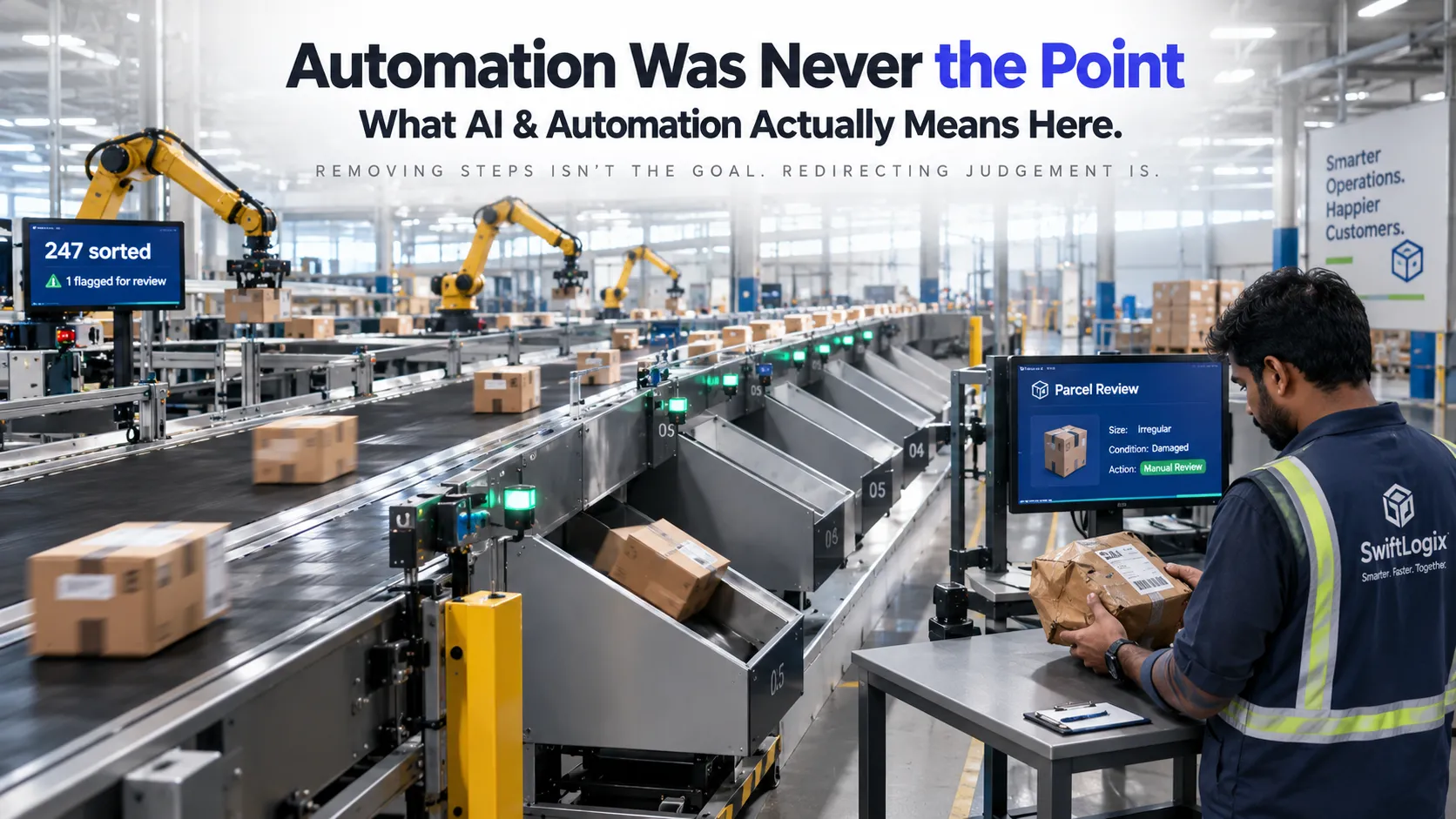
For most of the last decade, "AI & Automation" meant scripting away repetitive work: form-filling, data entry, routine reports. The technology has moved faster than the phrase has. Today's systems don't just execute a fixed sequence — they can decide, draft, and act inside a range you define. That changes what this category of work is actually about.
Automation was never the point
Removing manual steps was always a means, not an end. The real goal was freeing people to spend their attention on judgement calls a machine couldn't make. The mistake many programmes make is optimising for the visible metric — hours saved — while leaving the judgement question unanswered: when the system can now decide as well as execute, who is accountable for what it decides?
Where it actually pays off
The automation work that compounds isn't the flashiest — it's the kind that removes a whole category of decision fatigue rather than a single task. Triage that used to eat a support lead's morning. Reconciliation that used to require someone to hold three systems' worth of context in their head. In both cases, the win isn't speed; it's that a person's attention goes back to the 10% of cases that actually need it.
What good work looks like here
- It starts by mapping the decisions being delegated, not the tasks being removed.
- It defines, in writing, what the system is not allowed to decide alone.
- It treats the automation as a colleague with a job description — reviewed, revisited, and occasionally re-scoped.
AI & Automation, done well, isn't a cost line that shrinks. It's a redistribution of attention toward the decisions that were always the hard part.
Ready to put these insights into practice?
Let's discuss how we can help you achieve similar results