
AI-Driven Engineering: The Future of Software Development
When code is cheap to generate, the engineering skill that matters most shifts from writing it to knowing whether it should exist at all.
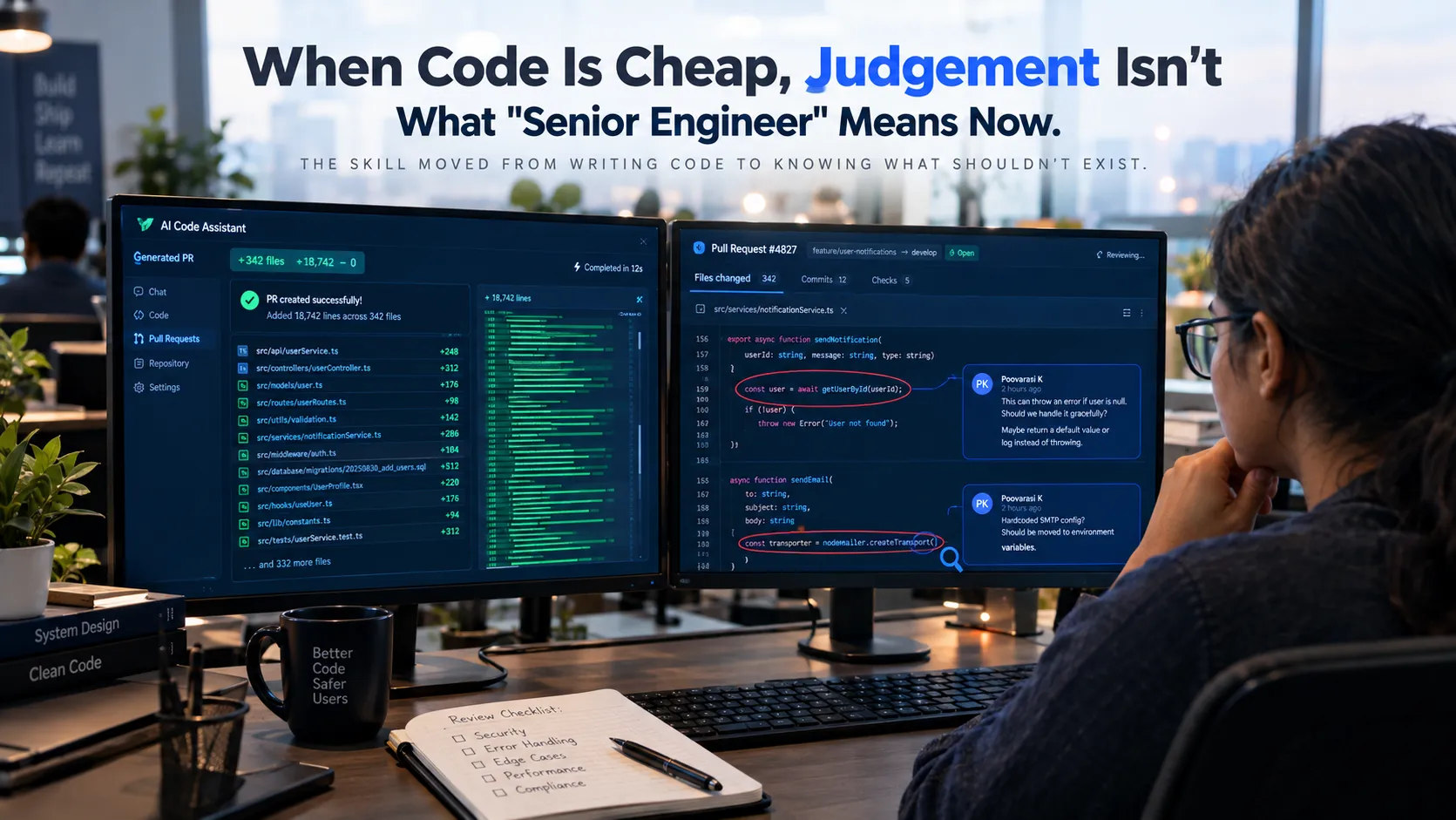
AI-assisted coding tools have moved past novelty. Across the engagements we run, generation now handles a real share of boilerplate, tests, and first-draft implementations. The interesting shift isn't how much code gets written faster — it's what "senior engineer" starts to mean once writing code stops being the bottleneck.
The bottleneck moved upstream
When implementation is fast, the constraint moves to the decisions that come before it: what to build, what not to, and how a change fits into a system nobody has the full picture of anymore. Engineers who used to be measured on how much they shipped are increasingly measured on how well they scope what shouldn't be shipped.
Review becomes the real skill
Generated code is rarely wrong in an obvious way — it's wrong in a plausible way, which is harder to catch. Teams that get real value from AI-driven engineering invest deliberately in review depth, not just review speed. The fastest teams we've seen are not the ones generating the most code; they're the ones with the sharpest eye for the 10% of a diff that actually matters.
What changes for engineering leaders
- Hiring shifts toward judgement and systems thinking over raw output speed.
- Code review time increases even as code-writing time falls.
- Technical debt conversations start earlier, because it's now cheap to create a lot of it fast.
AI-driven engineering isn't a productivity story. It's a redistribution of where engineering effort actually needs to go — and the organisations getting ahead are the ones redesigning their process around that, not just their tooling.
Ready to put these insights into practice?
Let's discuss how we can help you achieve similar results