
Cloud, DevOps & Reliability
Uptime isn't purchased from a cloud provider. It's built into how a team deploys, monitors, and responds — long before anything actually breaks.
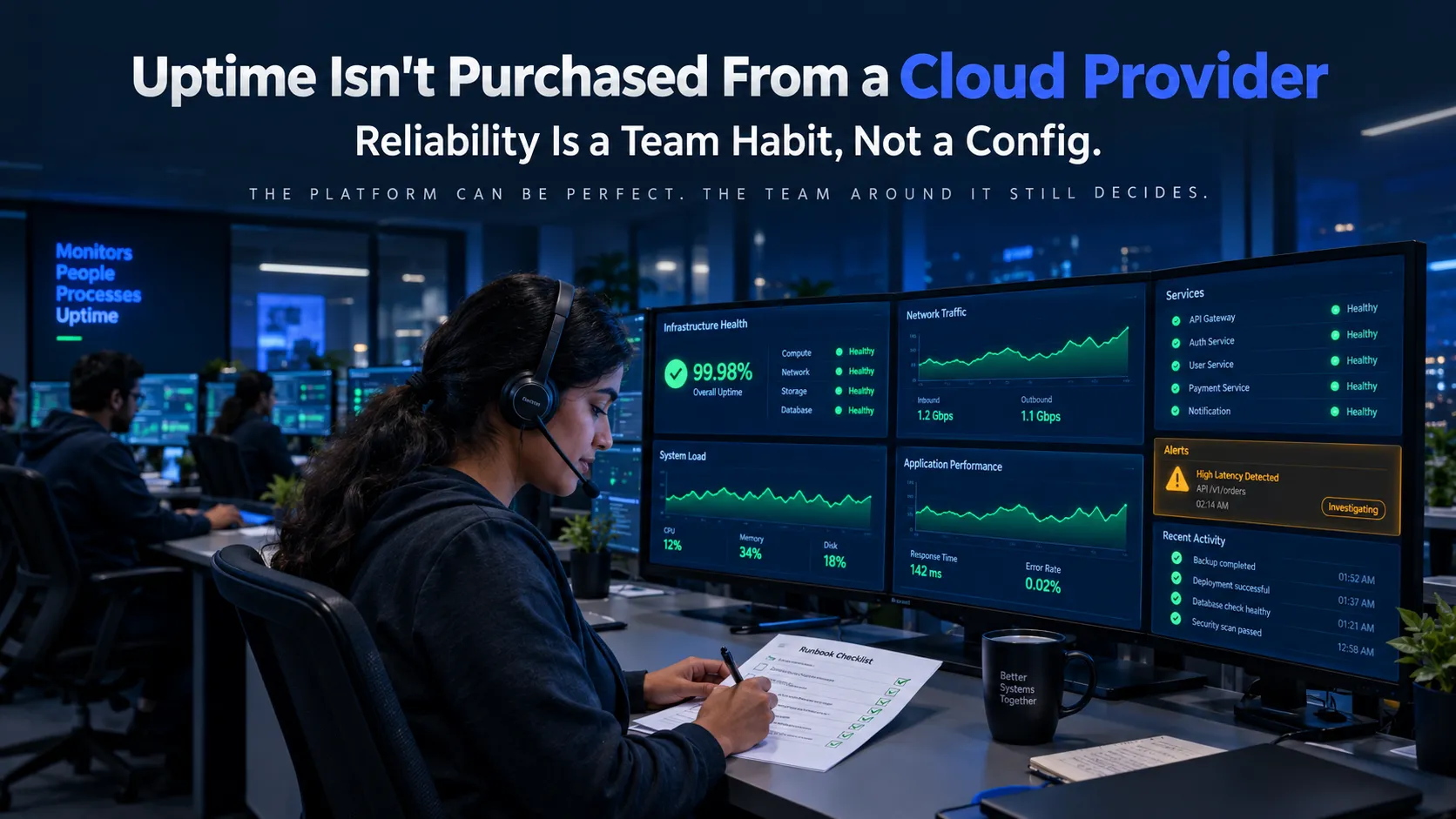
Every major cloud provider now sells reliability as a checkbox: multi-region failover, managed backups, auto-scaling. And still, outages happen — not because the infrastructure failed, but because the organisation running on top of it wasn't built to absorb the failure gracefully.
Infrastructure is necessary, not sufficient
A resilient platform reduces the odds of a hardware or network failure. It does nothing for the deploy that shipped without a rollback plan, the alert that paged the wrong person, or the runbook that existed only in someone's head. Cloud and DevOps maturity is measured less by what's automated and more by what still requires a clear-headed human decision — and whether that person has what they need when it's 2am.
The discipline behind the dashboard
The teams with the best reliability numbers usually have the least exciting engineering culture: boring, consistent deploys; blameless postmortems that actually change something; on-call rotations sized so nobody burns out into carelessness. None of that shows up in an architecture diagram, but all of it shows up in the outage log.
What we look for first
- How a team behaves during the last incident, not just their monitoring stack today.
- Whether ownership of a service is explicit, or assumed until something breaks.
- Whether "reliability" is a shared goal, or one team's job to defend against everyone else's deadlines.
Cloud, DevOps, and reliability work converge on one idea: the platform can be world-class and the system can still fail, if the organisation around it wasn't designed to hold the line.
Ready to put these insights into practice?
Let's discuss how we can help you achieve similar results