
Cloud Transformation Guide: Strategic Migration and Optimization
Migrating to the cloud is the easy 20%. The other 80% — the part that decides whether it was worth it — happens after the migration is "done."
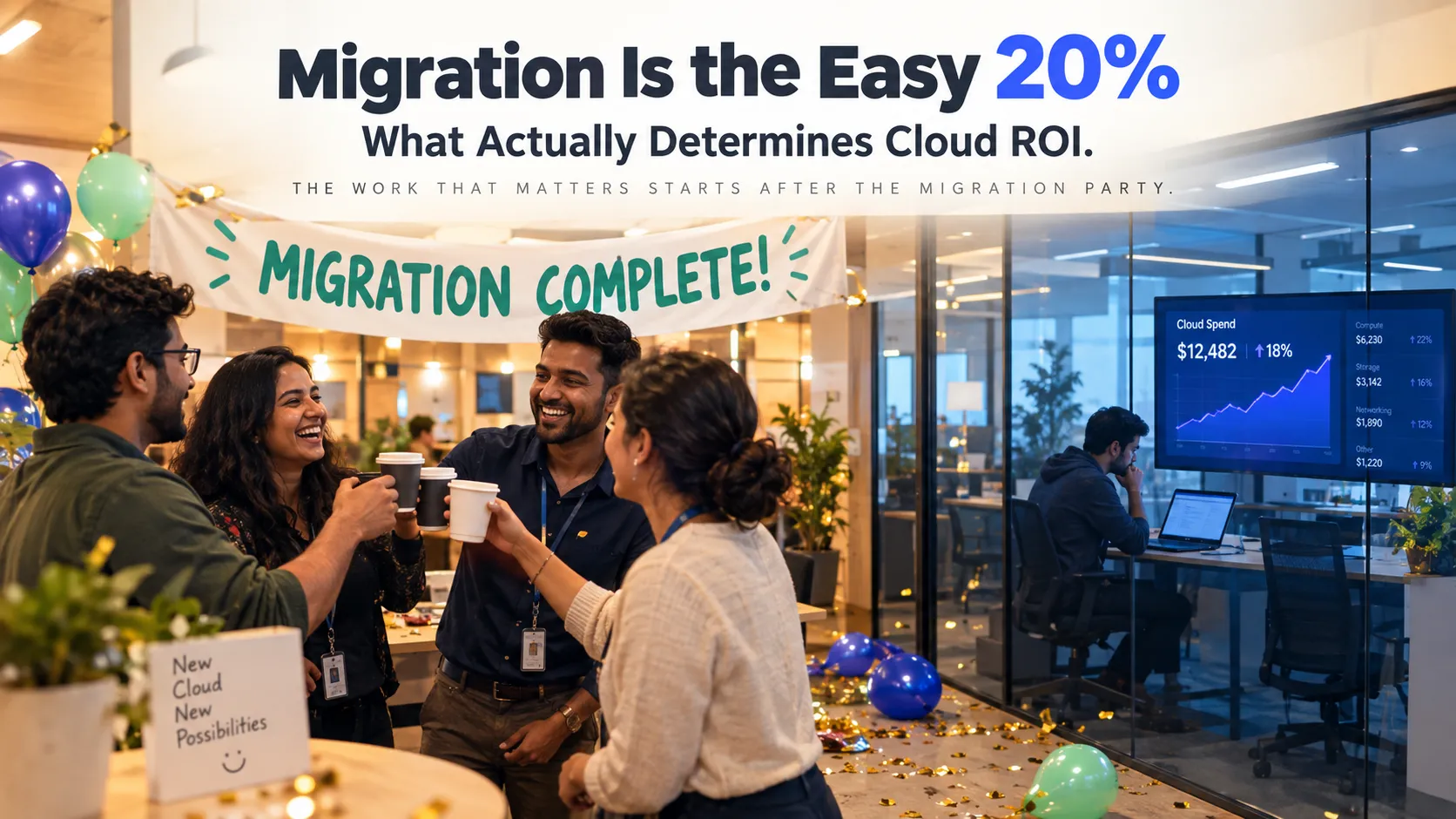
Most cloud transformation programmes are scoped, funded, and celebrated around a single milestone: the migration is complete. Workloads are running in the new environment, the old data centre contract has lapsed, the project closes. That milestone, in our experience, marks the start of the work that actually determines the return on the investment — not the end of it.
Migration is a move, not a transformation
Lifting a workload into the cloud without redesigning how it's built, deployed, or paid for mostly just relocates the same constraints onto a different bill. The organisations that see real gains treat the migration as the opening move in a longer process of re-architecting for elasticity, observability, and cost visibility — not the finish line.
Where the real optimisation lives
Cost overruns after migration rarely trace back to the cloud provider's pricing. They trace back to resources provisioned for a peak that never repeats, services nobody remembered to decommission, and a lack of anyone whose job it is to keep asking "do we still need this running." Optimisation is a habit, not a one-time audit.
What a strategic migration actually requires
- A named owner for cost and utilisation after go-live, not just during the project.
- Architecture decisions made with elasticity in mind, not a like-for-like lift of the old design.
- A 90-day post-migration review built into the plan from day one, not added when the bill arrives.
A cloud transformation succeeds or fails largely in the months nobody's watching closely — after the migration party, before the next initiative takes the spotlight.
Ready to put these insights into practice?
Let's discuss how we can help you achieve similar results