
Digital Reliability Report 2026
Across the incidents we've studied this year, the pattern repeats: the technology held up. The organisation around it didn't.
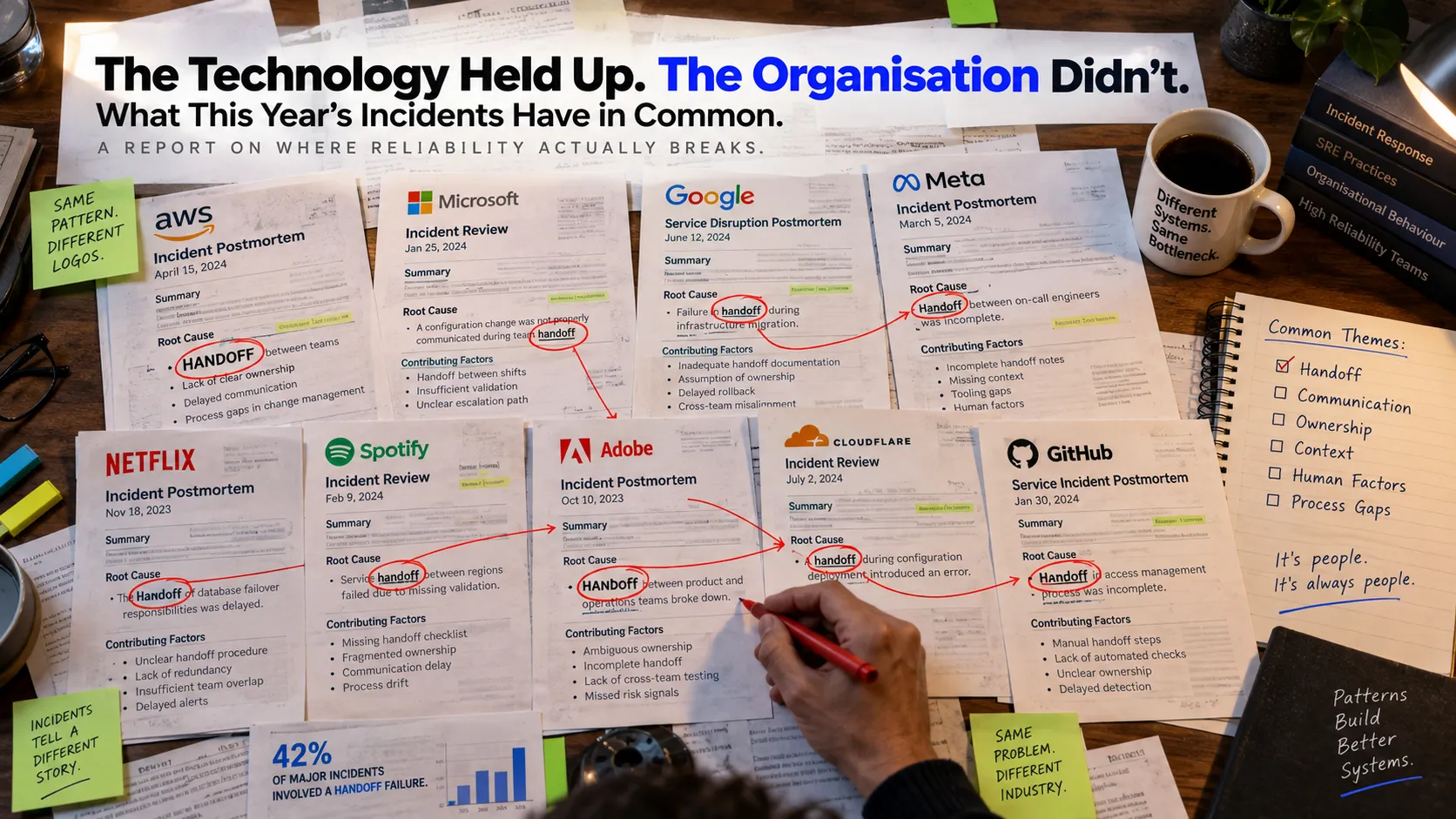
This year's reliability engagements gave us a wide enough sample to look for patterns across incidents rather than judging each one in isolation. The findings were consistent enough to report as a trend rather than a coincidence: the systems involved were rarely the weak link.
Finding one: root causes cluster at handoffs
Reviewing post-incident reports across multiple organisations, the majority of severe outages traced back not to a single component failing, but to a handoff — between teams, between on-call shifts, between an alert firing and a person owning the response. The technology usually did what it was built to do; the gap was in who was supposed to notice and act.
Finding two: uptime correlates with clarity of ownership
The organisations with the strongest reliability track records didn't necessarily have more sophisticated infrastructure. They had unambiguous answers to "who owns this service" and "who decides during an incident" — answers that existed before the incident, not improvised during it.
Finding three: reliability work is undervalued until it isn't
- Reliability investment is consistently the first thing deprioritised under deadline pressure.
- The cost of that deprioritisation shows up months later, disconnected from the decision that caused it.
- Teams that protect reliability budgets proactively spend less, overall, than teams that only fund it reactively after an outage.
The clearest signal from this year's data: reliability isn't primarily an engineering metric. It's a record of how well an organisation designed for the moment things go wrong.
Ready to put these insights into practice?
Let's discuss how we can help you achieve similar results